

Clients keep asking for “wow” interiors, but your samples scream “2009 PowerPoint background,” right?
Modern digital glass printing finally lets you dodge cheesy stock patterns and upgrade to museum-level visuals without blowing the budget or timeline.
From ultra-fine gradients to brand-accurate colors, new print tech makes glass walls, partitions, and façades do double-duty as both design feature and functional surface.
Need hard numbers to convince procurement? Current project benchmarks and ROI data in this industry report show how printed glass boosts perceived value and lease appeal.
The latest design trends also tackle glare, privacy, and durability, translating your mood boards into long-lasting, code-compliant installations.
Stop wrestling with vinyl stickers and dated laminates; modern digital glass printing gives you scalable, future-ready design freedom—without the maintenance drama.
1. 🌀 Minimalist Gradient Frit Patterns for Sleek, Light-Filled Office Partitions
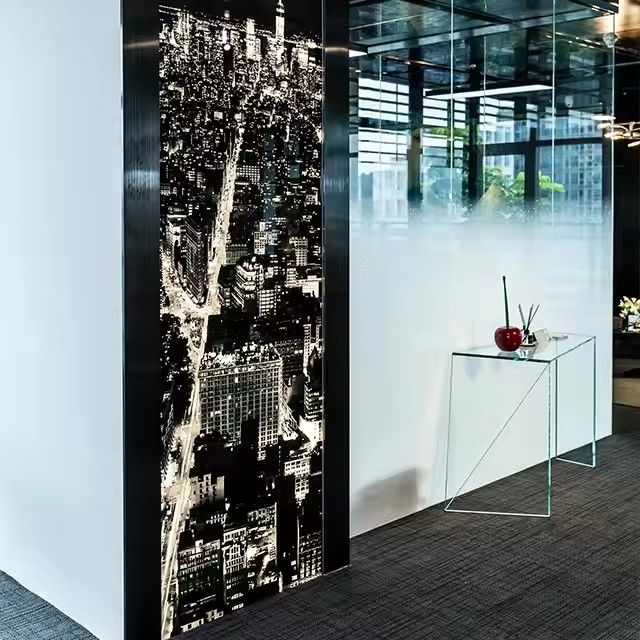
Minimalist gradient frit patterns are one of the most refined digital glass printing trends for commercial interiors. By subtly shifting opacity from transparent to opaque, these designs guide light, manage privacy, and reduce glare without visually weighing down the space.
For modern workspaces aiming for an open-plan aesthetic, digitally printed frit gradients on toughened glass keep sightlines clear while improving acoustic comfort and visual coherence across meeting rooms, corridors, and collaboration zones.
1.1 Design Principles Behind Gradient Frits
Gradient frit patterns rely on precise digital dot density control to move from dense, privacy-enhancing areas to fully transparent zones. This method balances aesthetics and function, directing attention where it matters—such as entrances or key workstations—while softening harsh daylight at windows and perimeter partitions.
- Dot size and spacing determine opacity and visual softness.
- Vertical gradients help with privacy at eye level.
- Horizontal gradients are ideal for sun shading and glare reduction.
- Neutral tones (white, soft gray) keep the interiors timeless and flexible.
1.2 Pairing Gradients with Office Color Palettes
Digital glass printing allows gradient frits to be tuned to brand palettes or neutral schemes. Warm whites and subtle beige gradients pair well with wood and soft textiles, while cool grays and soft blues complement metallic frames and minimalist tech-driven spaces.
- Monochrome gradients blend into minimalist interiors and reduce visual clutter.
- Soft brand tints maintain identity without overwhelming the workspace.
- Complementary wall and ceiling colors amplify the glass effect.
- Consistent gradient language across floors unifies multi-level offices.
1.3 Performance: Light Management & Occupant Comfort
Beyond aesthetics, gradient frits significantly improve visual comfort in open offices. They mitigate direct glare from perimeter glazing, improve screen visibility, and reduce the perception of “fishbowl” meeting rooms while still maintaining a sense of openness.
| Performance Aspect | Impact of Gradient Frit Glass |
|---|---|
| Glare Control | Reduces direct sunlight on workstations near windows |
| Privacy | Softens visibility into meeting rooms at eye level |
| Daylight Penetration | Preserves natural light distribution deep into the floorplate |
| User Comfort | Creates visual calm and decreases eye strain |
1.4 Application Ideas with BLUE-SKY Printed Partitions
For commercial interiors, gradient frit partition systems can integrate doors, hardware, and acoustic framing in a unified language. A Printed Glass Office Partition with Door | Manufacturer solution provides both the structural integrity and the precision printing needed for stable gradients across wide spans.
- Boardroom fronts with denser gradient bands at seated eye level.
- Focus pods enclosed with soft, calming vertical gradients.
- Corridor sides that fade from opaque at floor level to clear above.
- Reception backdrops combining gradient frit with subtle branding.
2. 🧊 Frosted and Opaque Digital Prints Enhancing Privacy in Meeting Rooms
Frosted and opaque digital print finishes remain essential for confidential spaces in commercial interiors. Unlike traditional sandblasting, digital methods allow precise patterns, logos, and varying opacity levels to be integrated on the same pane, fine-tuning privacy without sacrificing design consistency.
These finishes are ideal for huddle rooms, HR offices, and client-facing meeting spaces where discretion, acoustic quality, and a polished appearance are non-negotiable.
2.1 Balancing Transparency and Confidentiality
Modern meeting rooms require privacy without feeling sealed off. Digitally printed frosted layers can be concentrated at seated head height, with clear bands above and below to keep the space visually connected to the office. This strategy keeps sensitive conversations shielded while maintaining visual openness.
- Partial frosting for semi-private project rooms.
- Full-height opaque bands for HR, legal, or finance spaces.
- Patterned frosting to indicate zones without solid barriers.
- Variable opacity to suit different meeting room categories.
2.2 Data Insight: Growing Demand for Printed Privacy Glass
The adoption of digitally printed privacy glass in commercial interiors has risen sharply as open offices mature and post-pandemic expectations shift toward healthier, flexible environments. The following bar chart conceptually illustrates how demand for frosted and opaque printed glass solutions has grown across key sectors.
2.3 Material Choices: Back-Painted and Toughened Solutions
For applications that demand both privacy and impact resistance, back-painted and tempered glass is a robust specification. In wet or high-maintenance zones, such as commercial washrooms or spa facilities, a Back Painted Tempered Glass for Bathroom Glass Partitions solution offers easy cleaning, scratch resistance, and consistent opacity.
| Glass Type | Typical Use | Key Benefit |
|---|---|---|
| Back-painted tempered | Bathrooms, service cores, columns | Full opacity and color stability |
| Frosted digital print | Meeting rooms, focus pods | Custom opacity patterns |
| Laminated opaque interlayer | Security areas, data rooms | Enhanced safety and sound dampening |
2.4 Branding and Wayfinding in Meeting Room Glass
Frosted zones can double as wayfinding and branding elements when integrated with subtle logos, room names, and directional symbols. This avoids separate signage clutter and aligns with clean, modern office standards. Carefully scaled graphics ensure legibility without overpowering the glass itself.
- Room names etched in negative space within frosted fields.
- Soft gradient borders indicating room hierarchy or booking priority.
- Color-coded banding for different floors or departments.
- QR codes printed discreetly for room booking systems.
3. 🎨 Vivid Large-Scale Murals Turning Commercial Lobbies into Branded Storytelling Spaces
Digital glass printing now enables full-height, large-format murals that transform lobbies into immersive brand experiences. From abstract gradient art to high-resolution photography and graphic narratives, these installations communicate identity, heritage, and future vision the moment visitors step inside.
Durable inks fused into tempered or laminated glass keep colors vibrant under intense lobby lighting and heavy daily traffic.
3.1 Brand Storytelling with High-Resolution Glass Murals
Large printed glass murals can align with brand narratives through imagery, typography, and color. Whether depicting cityscapes, product stories, or conceptual patterns, the artwork becomes an architectural feature rather than an add-on, seamlessly integrating with reception desks, lift lobbies, and double-height walls.
- Multi-panel murals covering full lobby walls.
- Layered imagery with translucent and opaque areas.
- Incorporation of subtle slogans or mission statements.
- Nighttime backlighting to amplify impact.
3.2 Technical Considerations for Large-Scale Panels
For expansive surfaces, digital glass printing must handle precise color consistency and panel-to-panel alignment. Tempered or laminated formats, such as 3-19mm Custom Color Digital Printed Laminated Tempered Art Glass for Walls, provide the structural performance and safety required in commercial environments.
| Factor | Design Impact |
|---|---|
| Panel size and thickness | Determines joint spacing and support details |
| Color calibration | Ensures seamless transitions between panels |
| Surface finish (gloss/matte) | Controls reflections in strong lobby lighting |
| Fixing method | Affects perceived depth and shadow lines |
3.3 Integrating Murals with Furniture and Lighting
When specifying lobby murals, coordination with furniture, lighting, and flooring is crucial. Neutral finishes around the glass allow the artwork to lead, while targeted accent lighting enhances color saturation and depth, ensuring the mural remains the focal point during both day and night usage.
- Wall-washer lighting for even illumination of tall murals.
- Low-glare fixtures to prevent harsh reflections.
- Reception desks aligned to key focal points in the artwork.
- Seating layouts angled to appreciate the mural’s narrative.
4. 🌿 Biophilic Printed Glass Motifs Bringing Natural Calm to Retail Interiors
Biophilic glass printing introduces calming nature-based motifs into commercial and retail interiors without the maintenance requirements of living installations. Leaf patterns, forest silhouettes, and water-inspired gradients create a sense of refuge that makes customers dwell longer and feel more relaxed.
These motifs work especially well in wellness brands, hospitality, and food and beverage interiors where atmosphere drives revenue.
4.1 Types of Biophilic Motifs Suited to Glass
Digitally printed biophilic designs can be abstract or literal. Soft botanical outlines, blurred forest scenes, or geometric interpretations of natural textures suit contemporary brands, while more realistic imagery aligns with spa or healthcare environments.
- Leaf veining and canopy silhouettes on partitions.
- Water ripple patterns on shower or spa glass.
- Stone, wood, or moss textures as backlit feature walls.
- Gradient sky tones in skylights or overhead panels.
4.2 Using Printed Glass in Retail Fitting Rooms & Product Zones
Biophilic prints enhance fitting rooms, feature walls, and product displays by softening bright lighting and creating a more inviting environment. For wet or high-contact zones, Custom Size Patterned Tempered Glass for Shower Doors demonstrates how toughened glass with printed motifs withstands frequent use while maintaining sharp pattern definition.
| Retail Zone | Recommended Biophilic Print | Key Benefit |
|---|---|---|
| Fitting rooms | Soft foliage silhouettes | Comfort and visual softness |
| Window displays | Bold, high-contrast leaf or floral motifs | Street-side visual impact |
| Checkout areas | Subtle forest or water gradients | Stress reduction while queuing |
4.3 Combining Biophilic Glass with Lighting for Mood
Printed biophilic glass becomes especially powerful when paired with layered lighting. Backlighting, edge lighting, and adjustable color temperature can transition a space from energetic daytime retail to intimate evening atmosphere.
- Backlit glass panels behind shelving or bars.
- Warm-white lighting to emphasize wood and green motifs.
- Tunable white light to shift mood throughout the day.
- Edge-lit glass for subtle, glowing outlines of patterns.
5. 🏢 Durable Wayfinding and Signage Glass Solutions by BLUE-SKY for High-Traffic Areas
Wayfinding and signage glass must withstand constant contact, cleaning, and environmental changes. BLUE-SKY digital glass solutions provide sharp graphics, long-term color stability, and excellent impact resistance, making them ideal for airports, hospitals, shopping centers, and transport hubs.
Printed glass signage integrates direction, regulation, and branding into one coherent, easy-to-maintain system across the entire building.
5.1 Benefits of Printed Glass for Wayfinding
Unlike vinyl or applied films, digitally printed graphics fired onto or encapsulated within glass are far more durable. They resist peeling, fading, and damage from cleaning chemicals, which is critical in high-traffic circulation zones.
- Permanent, tamper-resistant graphics.
- Superior scratch and impact resilience.
- Consistent color accuracy across multiple signs.
- Compatibility with both interior and sheltered exterior use.
5.2 Integrating Signage with Doors and Furniture
Wayfinding can be elegantly integrated into doors, balustrades, and tabletops to avoid visual clutter. For entrances and check-in counters, 10mm Tempered Toughened Glass for Doors & Table Top Decor pairs structural robustness with crisp iconography or branding, ensuring clarity under heavy usage.
| Element | Glass Use | Benefit |
|---|---|---|
| Lift lobbies | Printed floor index panels | Clear orientation at decision points |
| Handrails/balustrades | Directional arrows and zoning markers | Discreet yet constant guidance |
| Reception desks | Embedded logos and welcome messages | Strong first impression |
5.3 Accessibility and Multilingual Design Considerations
Digital glass printing enables high-contrast, large-format typography and tactile overlays for inclusive navigation. Symbols, multilingual text, and color-coding can be designed as a single visual system that remains legible from distance and complies with accessibility standards.
- High-contrast text/background combinations.
- Universal pictograms for fast recognition.
- Color-coded routes or zones across floors.
- Integration with digital wayfinding screens or QR codes.
Conclusion
Modern digital glass printing has shifted from a purely decorative option to a core architectural tool for commercial interior projects. From minimalist gradient frit patterns to bold lobby murals and biophilic motifs, printed glass now manages privacy, light, orientation, and brand identity in a single, durable medium.
High-performance solutions such as laminated and tempered printed glass deliver both safety and aesthetics, even in demanding environments like retail, transport hubs, and healthcare facilities. With precise color control, intricate patterning, and compatibility with backlighting, printed glass can transform partitions, doors, walls, and signage into cohesive storytelling elements.
As commercial interiors respond to hybrid work patterns, wellbeing priorities, and heightened expectations around visual quality, digital glass printing provides designers and owners with a flexible, future-proof material palette that supports both functional performance and memorable spatial experiences.
Frequently Asked Questions about modern digital glass printing design
1. What is digital glass printing in commercial interiors?
Digital glass printing is a process that uses ceramic or UV inks and high-precision printers to apply images, patterns, or gradients directly onto glass surfaces. Once cured or fired, the graphics become highly durable, enabling custom partitions, murals, signage, and privacy screens in offices, retail, hospitality, and public buildings.
2. How durable are digitally printed glass surfaces?
When ceramic inks are fused into tempered or laminated glass during heat treatment, the print becomes extremely resistant to scratching, UV fading, moisture, and cleaning chemicals. This makes it suitable for high-traffic areas like corridors, lobbies, bathrooms, and transport hubs where traditional films or applied graphics would degrade quickly.
3. Can digital glass printing support privacy without blocking light?
Yes. Techniques such as gradient frit patterns, frosted motifs, and variable-opacity layers control sightlines while preserving daylight. Designers can specify denser prints at eye level for privacy, with clear zones above and below, ensuring spaces feel open yet protected—ideal for meeting rooms, focus pods, and semi-private offices.
4. Are there size limitations for large-scale glass murals?
Large murals are typically created by combining multiple printed panels. While each panel has a maximum print and tempering size, digital workflows allow seamless alignment across joints. Using calibrated color management and careful detailing, full-height and multi-bay mural walls can appear visually continuous.
5. Is printed glass suitable for wet or bathroom environments?
Printed and back-painted tempered glass is highly suitable for wet areas, provided correct edge sealing and fixing methods are used. Toughened safety glass with fired inks or back-painted coatings resists moisture ingress, stains, and mold, making it ideal for shower enclosures, bathroom partitions, and spa applications.