

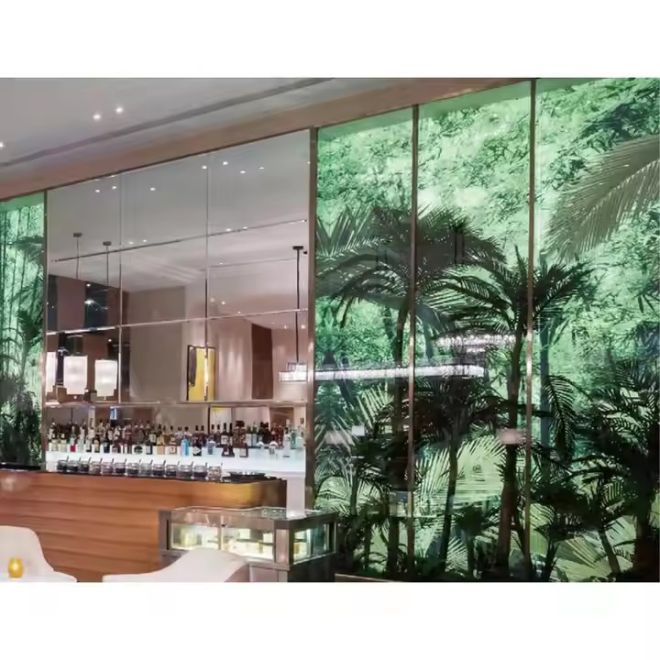
Introduction to Digital Print Glass
● Definition and Basic Explanation
Digital print glass represents a groundbreaking advancement in glass technology, merging artistic design and innovative production processes to create customizable and durable glass surfaces. Unlike traditional methods, digital print glass utilizes cutting-edge digital printing technologies to apply high-resolution images directly onto glass surfaces. This method not only enhances aesthetic appeal but also adds functional benefits like privacy, shading, and branding opportunities.
● Importance in Modern Applications
In an era where aesthetics and functionality go hand-in-hand, digital print glass has emerged as a preferred choice for architects, designers, and manufacturers. The demand for unique and personalized designs is driving the growth of modern digital glass printing design, transforming spaces and giving rise to new creative possibilities.
The Digital Printing Process
● Use of Ceramic Inks
Central to the process of digital glass printing is the use of ceramic inks. These inks are made from fine glass particles mixed with inorganic pigments. When printed onto glass and subsequently fired in a tempering furnace, the inks fuse with the glass surface. This fusion results in vibrant, durable, and UV-resistant images, ensuring longevity and maintaining aesthetic integrity over time.
● High-Temperature Bonding for Durability
The high-temperature bonding process not only imparts vibrant colors and intricate details but also guarantees the durability of the printed glass. This method ensures resistance to scratches, weathering, and fading, making digital print glass suitable for both interior and exterior applications.
Technological Advancements in Digital Glass Printing
● Integration of Graphic Design and Inkjet Technology
Modern digital glass printing design is a result of the seamless integration of graphic design software with advanced inkjet printing technology. This synthesis allows for unparalleled precision, offering high-resolution prints that capture even the minutest details of a design. The flexibility of this technology enables the reproduction of complex patterns, textures, and gradients, adding a new dimension to glass design.
● High-Resolution Printing Capabilities
The high-resolution capabilities of digital glass printing technology have set a new standard in the industry. With resolutions reaching up to 1440 dpi, the clarity and sharpness of the printed designs are unmatched. This precision is especially crucial for applications requiring detailed imagery, such as corporate branding or artistic installations.
Applications of Digital Print Glass
● Usage in Architecture and Construction
In architecture, digital print glass has revolutionized façade design, interior partitions, and decorative elements. It allows for the creation of bespoke designs that enhance building aesthetics while also addressing functional needs like solar control and privacy. Its versatility is further extended in the construction sector, where it is used in balustrades, skylights, and canopies.
● Automotive and Appliance Industries
The automotive industry benefits from digital print glass in applications like sunroofs, windshields, and window accents, where customization is paramount. Similarly, the appliance industry is embracing printed glass for its potential to provide uniquely designed surfaces on products like refrigerators, ovens, and dishwashers, setting them apart in competitive markets.
Advantages of Digital Print Glass Over Traditional Methods
● Comparison with Screen Printing
Traditional methods like screen printing have limitations in terms of design complexity and color variation. Modern digital glass printing design surpasses these limitations by offering an extensive color palette and the ability to print intricate designs without the need for expensive setup and extensive preparation times.
● Benefits of Flexibility and Design Range
Flexibility is one of the most significant advantages offered by digital print glass. Designers are no longer bound by fixed patterns or limited color choices. The vast range of designs, from abstract art to photorealistic images, can be printed directly onto the glass, offering unmatched customization possibilities for both wholesale modern digital glass printing design buyers and individual consumers.
Durability and Weather Resistance
● Processes Ensuring Scratch and Fade Resistance
Digital print glass undergoes rigorous testing to ensure it withstands the elements. The use of ceramic inks and high-temperature bonding ensures resistance to abrasions, thus maintaining the clarity and vibrancy of the design. This reliability makes it an ideal choice for external installations and high-traffic areas.
● Long-Term Durability Considerations
The long-term durability of digital print glass is not just about resisting the weather or vandalism; it also involves maintaining its aesthetic appeal over time. The technological advancements in this field have led to improved techniques that prevent chipping and color fading, thereby extending the life of the product and ensuring a sound investment for consumers.
Customization and Design Flexibility
● Color Variety and Design Techniques
One of the most appealing aspects of modern digital glass printing design is the vast array of colors and techniques available. From translucent tones to opaque finishes, the possibilities are virtually endless. This extensive range allows designers to experiment with different styles and effects, creating unique visual experiences tailored to specific customer preferences.
● Personalized Printing for Bespoke Projects
Customization is at the heart of digital print glass. Manufacturers and suppliers can offer customized solutions that align with a client's vision, whether it involves matching corporate branding colors or creating unique art installations. This level of personalization is a significant draw for wholesale modern digital glass printing design suppliers, as it opens up new business opportunities.
Environmental and Economic Benefits
● Efficiency of Digital Processes
From an environmental perspective, digital print glass offers a more sustainable solution compared to traditional printing methods. The digital process reduces waste, minimizes ink usage, and results in less energy consumption. These factors contribute to a smaller carbon footprint and align well with the growing demand for eco-friendly manufacturing practices.
● Economic Implications of Reduced Preparation Times
Economically, the efficiency of digital printing translates to cost savings. The reduced preparation time and lack of need for extensive setup mean that manufacturers can produce custom designs quickly and affordably. This efficiency is a boon for modern digital glass printing design manufacturers, allowing them to offer competitive pricing without sacrificing quality.
Challenges and Limitations
● Potential Drawbacks and Limitations
Despite its many advantages, digital print glass does present some challenges. The initial investment in high-quality printing equipment can be substantial. Additionally, achieving color consistency across large production runs can be difficult, posing a challenge for large-scale projects or projects that require batch consistency.
● Overcoming Technical Hurdles
To overcome these challenges, continuous innovation and investment in research and development are crucial. Advancements in ink formulations and printing technology are constantly being made, allowing manufacturers to address technical hurdles and advance the capabilities of digital print glass.
Future Trends and Innovations
● Emerging Technologies in Glass Printing
Looking to the future, the landscape of digital print glass is expected to evolve significantly. Emerging technologies such as augmented reality (AR) and interactive displays are beginning to integrate with glass printing designs, opening up new realms of innovation. These technologies will allow consumers to interact with glass surfaces in previously unimaginable ways, enhancing user experiences and providing new functionalities.
● Potential Future Applications and Markets
As technology advances, the potential applications for digital print glass will continue to expand. Innovations will likely drive growth in sectors such as smart buildings, where printed glass can play a crucial role in energy efficiency and information display. The global market is set to witness an increase in demand for these innovative solutions, providing new opportunities for modern digital glass printing design suppliers worldwide.
Conclusion: BLUE-SKY's Contribution to Digital Glass Printing
Since its establishment in 2000, Hangzhou Blue-sky Safety Glass Co., Ltd. has been at the forefront of the glass processing industry. With a large factory in Hangzhou near Ningbo and Shanghai ports, Blue-Sky specializes in tempered, laminated, insulated, and printed glass. With over 300 skilled employees and advanced imported equipment, they deliver high-quality products with exceptional service. Certified by CCC, ISO, European CE, Australian AS/NZS2208, and US SGCC, Blue-Sky provides customized glass solutions globally, making them a preferred and reliable modern digital glass printing design supplier.