

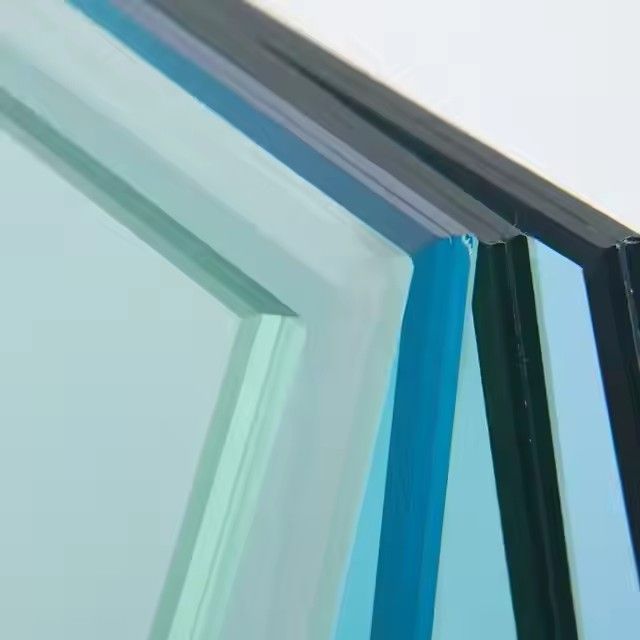
Heat reflective glass, we can call it coated glass too. Heat reflective glass is generally coated by one or more layers of films composed on the surface, making the glass rich in color and transmittance and reflectivity for light. Therefore, it is also known as sunlight control glass and mainly used in building and curtain wall.
Low-E glass is films composed of multiple layers of metals compounds coated on the surface of glass. The product has high transmittance and reflectivity for light, and has good thermal insulation performance. It is generally made into insulated glass products. The heat passed through the glass, can be transferred from indoors to outdoors. In winter, the indoor temperature is higher than the outdoor, so it requiring thermal insulation. In summer, indoor temperatures are lower than outdoor temperatures, so glass is required to provide insulation too. Low-E glass can provide both insulation and thermal insulation. The visible light transmittance of Low-E glass ranges from 0% to 95%, and the visible light transmittance represents the indoor lighting performance. The outdoor reflectivity ranges from 10% to 30%, which is the visible light reflectivity.