

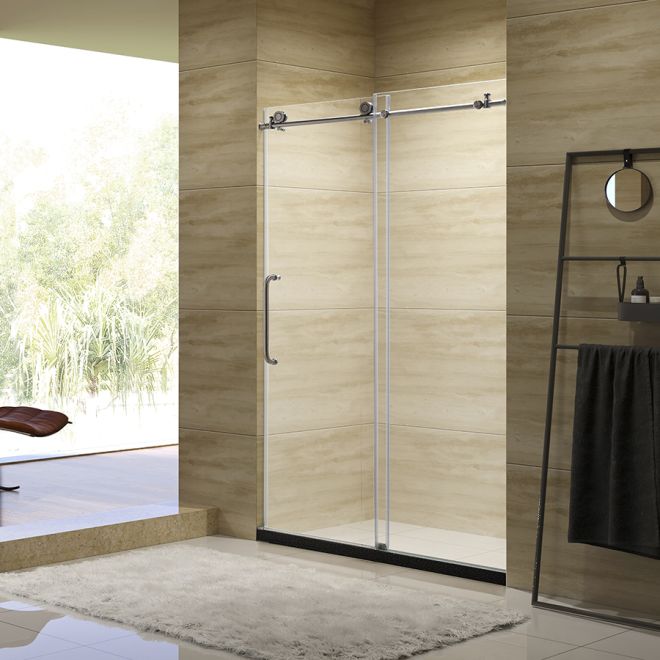
Still trying to make a stylish office out of a boxy room with straight glass walls? No wonder your layout meetings feel like déjà vu.
Curved glass partitions tackle the real pain points: dead corners, awkward traffic flow, and interiors that look more “budget meeting room” than “flagship HQ.”
By bending the glass instead of your design principles, you gain better space utilization, smoother circulation, and a far more premium visual effect—without turning the floorplan upside down.
From acoustic comfort to safety performance and installation details, the parameters behind curved glass matter more than most people think.
For data on impact resistance, bending radius limits, and cost comparison, check the latest industry analysis in this report: Global Architectural Glass Market Report.
Read on to see why “going straight” with glass might be costing you style, efficiency, and long-term value.
🔹 Enhanced Aesthetics: How Curved Glass Partitions Elevate Modern Interior Design
Curved glass partitions give interiors a fluid, sculptural quality that straight glass walls cannot match. Their gentle arcs soften hard lines, create a sense of motion, and enhance the feeling of openness. For architects and designers, they provide a premium visual focal point that communicates innovation, luxury, and contemporary style in corporate, retail, and residential spaces.
Beyond visual appeal, curved glass improves how occupants experience space. Light travels differently along a curve, creating subtle reflections and depth while maintaining full transparency. When combined with metal, timber, or stone finishes, curved glazing becomes a key design element that links different zones into a cohesive and highly photogenic environment that supports brand image and user comfort.
1. Organic Forms That Break Monotony
Where straight glass walls can feel rigid and repetitive, curved partitions introduce organic, flowing lines that relax the eye. This is particularly effective in large offices, hotel lobbies, and high-end retail where long corridors or open floors risk looking flat. Soft radii bring a sense of movement without sacrificing usable area or clear sightlines.
- Create natural wayfinding paths without solid walls
- Visually “round off” corners and structural columns
- Balance industrial materials with softer geometry
- Provide memorable architectural features for branding
2. Light, Transparency, And Visual Depth
Curved glass refracts and reflects daylight differently from planar glass, creating a dynamic play of highlights and soft shadows. This contributes to a richer visual texture while keeping the space bright and transparent. The result is a more immersive environment that feels larger and more premium than a layout defined only by straight lines.
| Aspect | Curved Glass Partition | Straight Glass Wall |
|---|---|---|
| Light Behavior | Subtle gradients, shifting reflections | Flat, direct reflections |
| Visual Depth | Enhanced sense of 3D layering | More two-dimensional perception |
| Perceived Luxury | High-end, custom-built appearance | Standard, expected solution |
3. Consistency With High-End Architectural Elements
Curved partitions align perfectly with other premium architectural components such as radius staircases, sculpted ceilings, and rounded balconies. Pairing bent glass with products like 6mm 8mm Safety Toughened Glass For Staircase Railing 10mm 12mm Tempered Glass creates a cohesive visual language that flows continuously from floors to balustrades and partitions.
- Ideal for atriums and stair voids
- Supports biophilic and organic design concepts
- Allows smooth transitions between levels and zones
- Strengthens high-end, hospitality-grade aesthetics
4. Customization, Branding, And Decorative Finishes
Curved glass offers an excellent canvas for decorative laminates, gradients, and digital artwork. When combined with Digital Printed Tempered Glass for Decorative Partitions, the glass surface can carry brand colors, logos, or subtle patterns that follow the curve, giving a refined, continuous graphic presence rather than a flat, billboard-like panel.
- Curved glass can incorporate frosted bands for privacy
- Gradient printing can visually slim or accentuate curves
- Color accents can guide circulation or denote zones
- Patterns appear more dynamic on curved surfaces
🔹 Space Optimization: Curved Glass Versus Straight Walls In Tight Floor Plans
In constrained floor plates, curved glass partitions can reclaim circulation space and smooth traffic flow in ways straight walls cannot. By wrapping around obstacles, following natural paths, or forming compact meeting pods, curved partitions improve both practical efficiency and spatial perception without sacrificing usable area or accessibility.
Well-designed curves reduce dead corners and awkward niches that straight glass often leaves behind. They introduce continuous, gentle turns that comply with accessibility standards and feel more intuitive to move through. This makes them particularly valuable in dense offices, co-working spaces, healthcare environments, and compact residential layouts where every square meter counts.
1. Making Tight Corridors Feel Wider
In narrow hallways and service routes, straight glass tends to emphasize linearity and make users feel compressed. Curved glass, by contrast, visually opens up the route. Even when corridor widths remain the same, the perception of space increases because the eye follows the curve rather than terminating at hard junctions.
- Curved walls soften bottlenecks and turn radii
- Reduced visual clutter from acute angles and corners
- Improved flow for people with mobility aids
- Enhanced comfort in high-traffic circulation zones
2. Maximizing Usable Floor Area Around Obstacles
In spaces with structural columns, cores, or irregular perimeters, curves allow glass to “hug” obstructions closely, trimming wasted pockets. Instead of boxing out columns with multiple straight segments, a single radius partition can capture more functional, contiguous space for desks, seating, or storage.
| Scenario | Straight Glass | Curved Glass |
|---|---|---|
| Partition Around Column | Leaves triangular unusable corners | Wraps column, preserving useable perimeter |
| Meeting Pod in Open Office | Square footprint, more circulation conflict | Rounded footprint, smoother circulation paths |
| Perimeter Fit-Out | Gaps between walls and façade curves | Continuous, closer alignment to façade |
3. Data-Driven Comparison Of Spatial Efficiency
The following simple bar chart compares notional spatial performance between typical straight and curved glass layouts in key metrics, helping to clarify where curved systems provide an advantage in compact plans.
4. Compact Zones: Pods, Showers, And Phone Booths
Curved glass is particularly effective for compact enclosures where you need privacy without a bulky footprint. Shower rooms, phone booths, and focus pods gain better circulation around them when corners are rounded. Solutions such as the Diamond Shape Stainless Steel Shower Room demonstrate how tailored angles and gentle arcs can optimize tight wet areas while retaining a distinctive design language.
- Rounded edges reduce collision risk in small bathrooms
- More efficient circulation paths in open-plan offices
- Opportunity to integrate sliding or pivot doors neatly
- Improved ergonomics for cleaning and maintenance access
🔹 Acoustic And Privacy Performance: Comparing Curved And Straight Glass Solutions
While both curved and straight glass partitions rely on glazing thickness, lamination, and seals for performance, curvature can subtly enhance acoustic behavior and privacy. Thoughtful detailing ensures that curved systems achieve excellent sound reduction, controlled transparency, and comfortable speech privacy in offices, hotels, and healthcare facilities.
Modern sound-rated glass products and framing allow curved partitions to perform on par with, or better than, many straight glazed systems when correctly specified and installed.
1. Acoustic Behavior Of Curved Versus Flat Glazing
Curved glass can disrupt parallel sound paths that cause flutter echo in long corridors or boardrooms. The gentle arc scatters sound reflections rather than bouncing them directly back, contributing to a more comfortable acoustic environment. When combined with laminated or thicker tempered glass, performance improves further, especially for speech-frequency noise.
- Reduced standing waves along long partitions
- Improved clarity in meeting rooms and collaboration zones
- Better integration with acoustic ceilings and soft furnishings
2. Sound-Isolated Work Zones With Glass Partitions
To achieve higher acoustic ratings, curved partitions can be paired with specialized systems like the Soundproof Tempered Glass Partition Wall for Office. These integrate thicker glass, double-glazed assemblies, or acoustic seals to minimize sound transfer while keeping the light, open appearance that clients expect from premium glass interiors.
| Component | Impact on Acoustic Performance |
|---|---|
| Glass Thickness / Lamination | Higher mass improves airborne sound reduction |
| Frame & Seal Quality | Limits flanking paths around curved interfaces |
| Curve Geometry | Diffuses reflections, reducing echo build-up |
3. Visual Privacy, Screening, And Comfort
Curved partitions can be positioned to remove direct sightlines while still admitting daylight, which is harder to achieve with purely straight runs of glass. By adjusting radius and alignment, sensitive areas (HR offices, medical consulting rooms, private lounges) can gain visual shielding without solid walls. Frosted bands or printed patterns further refine privacy levels without sacrificing transparency higher up.
🔹 Safety, Durability, And Maintenance Differences Between Curved And Straight Glass Walls
Safety and long-term durability are central concerns when comparing curved glass partitions with conventional straight walls. Modern curved systems are engineered using tempered or laminated safety glass to meet or exceed building codes, while precision hardware and framing ensure structural integrity in daily use.
With proper specification and detailing, bent glass performs reliably in demanding settings such as transit hubs, offices, hotels, and upscale residential projects.
1. Safety Glass Types And Code Compliance
Curved partitions are typically produced using fully tempered or heat-strengthened safety glass, often laminated for additional security and post-breakage integrity. Their performance is comparable to straight toughened glass; in many cases, the forming process is integrated with tempering, ensuring consistent strength and compliance with international safety standards for impact and barrier loads.
- Meets requirements for human impact zones
- Option for laminated make-ups for fall protection
- Compatible with handrail and balustrade applications
2. Resistance To Daily Wear, Impact, And Deflection
Curved glass can handle everyday stresses well when the radius, thickness, and fixing details are correctly engineered. The inherent geometry may even contribute to stiffness in some configurations. Combined with robust hardware, door systems like 1/2" & 3/8" Frameless Swing & Slider Shower Doors: Elegant Quality illustrate how premium glass solutions withstand frequent opening, closing, and cleaning in high-usage zones.
| Factor | Curved Glass | Straight Glass |
|---|---|---|
| Impact Resistance | Comparable when using same glass type/thickness | Industry benchmark for safety glazing |
| Structural Deflection | Controlled by radius, thickness, and fixings | Controlled by thickness and span |
| Edge Protection | Critical at transitions and door openings | Critical at corners and joint lines |
3. Cleaning, Maintenance, And Long-Term Appearance
From a maintenance standpoint, curved glass surfaces clean similarly to straight glass. The key is ensuring access around the curve and avoiding dirt-trapping profiles. Smooth, continuous tracks and minimal framing simplify daily cleaning and reduce mold or grime buildup, particularly in wet rooms and kitchens.
- Non-porous surfaces resist staining and discoloration
- Continuous curves reduce sharp corners where dust collects
- High-quality coatings (e.g., easy-clean) further reduce upkeep
🔹 Choosing The Right System For Your Project: Why BLUE-SKY Curved Glass Partitions
Selecting between curved and straight glass solutions depends on design intent, performance requirements, and budget. BLUE-SKY curved glass partitions are engineered to provide a refined balance of aesthetics, practicality, and long-term value for commercial, hospitality, institutional, and residential projects.
By integrating precise bending technology, robust safety glazing, and tailored detailing, BLUE-SKY systems turn curved glass into a reliable, scalable solution rather than a one-off, high-risk feature.
1. Matching Curved Glass To Project Objectives
Project teams should begin by defining what curved glass must achieve: statement aesthetics, space optimization, enhanced acoustics, or a combination. BLUE-SKY systems can be calibrated for each objective—whether it is a signature lobby wall, enclosed quiet pods in open offices, or elegantly sculpted spa and wellness areas.
- Varied radii and heights to suit layout and structure
- Choice of clear, tinted, frosted, or printed finishes
- Integration with doors, railings, and adjacent partitions
2. Integration With Other BLUE-SKY Glass Solutions
One advantage of working with a specialist supplier is the ability to coordinate multiple glass components under a single system approach. Curved partitions can align visually and technically with stair balustrades, shower enclosures, and decorative screens, producing a coherent material palette throughout the project.
| System Type | Typical Application | Synergy with Curved Partitions |
|---|---|---|
| Partition Walls | Offices, conference rooms | Shared finishes, coordinated hardware |
| Balustrades | Staircases, mezzanines | Aligned radii and glass thicknesses |
| Shower / Wet Areas | Hotels, residences, spas | Continuous design language across wet and dry zones |
3. Cost, Lead Times, And Value Engineering
While curved glass often carries a premium over standard flat panels, thoughtful design can offset additional cost through better space utilization and higher perceived value. Early coordination with BLUE-SKY enables rationalization of radii, repetition of panel types, and smart hardware choices that maintain aesthetic impact while respecting budget and schedule constraints.
- Standardized radii to reduce manufacturing complexity
- Modular panelization where possible
- Optimized glass thickness for performance and cost balance
Conclusion
Curved glass partitions provide distinct advantages over straight glass walls in both design and function. Their sculptural form softens interiors, eliminates visual monotony, and turns transparent enclosures into stand-out architectural elements. By shaping circulation routes and wrapping around obstacles, curves can also reclaim otherwise wasted pockets and create more intuitive, comfortable movement through tight floor plans.
From an acoustic and privacy perspective, curved partitions support high-performance solutions when paired with suitable glass types, seals, and framing. They meet modern safety and durability expectations, while maintenance demands remain comparable to standard glazing. When integrated with complementary products such as glass railings, shower systems, and digitally printed panels, curved partitions anchor a cohesive, high-end interior language.
Choosing BLUE-SKY curved glass systems ensures that design intent, safety, and practical constraints are all addressed through tested engineering and coordinated detailing. The result is an interior environment that feels more fluid, more efficient, and unmistakably contemporary compared with spaces defined only by straight glass walls.
Frequently Asked Questions about curved glass partition
1. Are curved glass partitions more expensive than straight glass walls?
Curved glass typically costs more due to specialized bending and tooling. However, careful design—using repeatable radii, standardized panel sizes, and integrated hardware—can control overall costs. In many projects, improved spatial efficiency and enhanced perceived value justify the premium compared with standard straight glazed partitions.
2. Can curved glass partitions provide good sound insulation?
Yes. When specified with suitable glass thickness, lamination, and quality perimeter seals, curved partitions deliver sound insulation comparable to high-performance straight systems. Pairing curvature with sound-rated products and careful detailing around junctions, doors, and ceilings is key to achieving target acoustic ratings.
3. How safe are curved glass partitions in high-traffic areas?
Curved glass partitions use tempered or laminated safety glass that meets building codes for human impact and barrier loads. Proper hardware, support profiles, and installation methods ensure stability in high-traffic zones such as offices, hotels, and retail spaces, making them as safe and robust as straight partitions.
4. Are curved glass partitions difficult to clean and maintain?
Cleaning curved glass is very similar to cleaning flat glass, using standard glass cleaners and soft cloths. The main considerations are access and detailing. Smooth, uninterrupted profiles and minimal framing reduce dirt-trapping points, simplifying routine maintenance in both dry and wet environments.
5. Where are curved glass partitions most beneficial?
Curved glass partitions are especially beneficial in reception areas, open-plan offices, showrooms, hotels, spas, and residential projects with limited floor space or irregular geometry. They work well where a high-end aesthetic, improved circulation, and refined acoustic and privacy performance are required within a transparent, light-filled environment.