

First, why should we consider the type of glass when choosing doors and Windows?
1, many will ask, choose doors and Windows is not the choice of profiles? Why even consider glass? As an important part of doors and Windows and sunlight rooms, glass bears the performance of lighting, heat preservation, sound insulation, safety and beauty. Moreover, there are more and more types of glass, and each family can choose different types of glass according to their surrounding environment and living needs.2, in addition, good doors and Windows are composed of profiles, glass, hardware, auxiliary materials, design and construction, and most of the area of a broken bridge aluminum doors and Windows are glass, the performance and quality of the glass directly determines the overall performance of the doors and Windows.
Second, what are the common types of window and door glass on the market?
The door and window glass we usually use in home decoration is roughly divided into the following types: tempered glass, insulating glass, laminated glass and coated glass. Let's take a look at them.1, tempered glass
tempered glass is the flat glass after heat treatment process, the use of tempered treatment to enhance the glass, high safety, even if broken, the debris will be similar to honeycomb obtuse small particles, not easy to cause serious harm to the human body, strong impact resistance, good thermal stability, in the domestic application is very wide ~ discrimination method: See if there is a toughened 3C mark at the corner of the glass, and 3C marks (the kind that cannot be scraped off) are basically toughened glass.1) Security. When the glass is damaged by external forces, the fragments will become obtuse small particles similar to honeycomb, which is not easy to cause serious harm to the human body.
2) High strength. The impact strength of tempered glass of the same thickness is 5 to 10 times that of ordinary glass, and the bending strength is 5 to 10 times that of ordinary glass.
3) Thermal stability. Tempered glass has good thermal stability and can withstand 3 to 5 times the temperature difference of ordinary glass.
2. Insulating glass
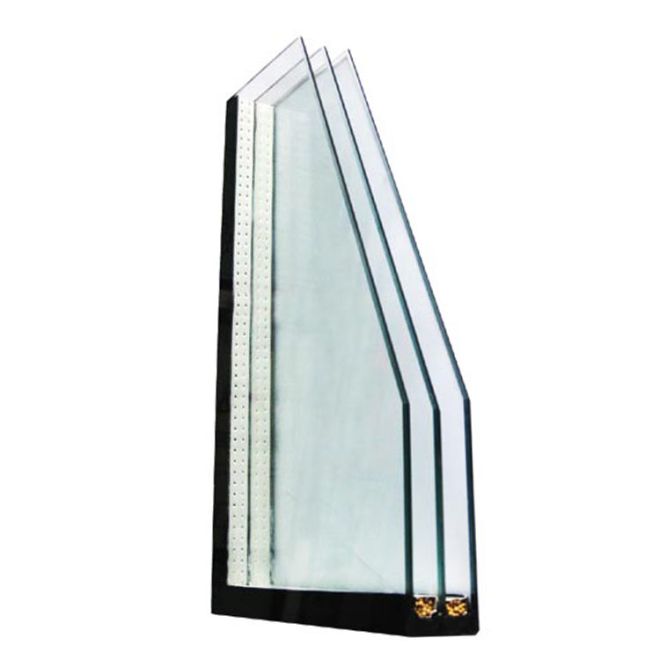
Insulating glass is made of two or more layers of tempered glass bonded and sealed. The middle is filled with dry gas, and the aluminum strip is filled with desiccant to ensure the dryness of the air between the glass sheets. Because the heat conductivity of the air is very low, the dry air is sealed between the two layers of glass, which can effectively block the loss of heat conduction, so that the insulating glass can achieve energy saving, anti-condensation, sound insulation and other effects.
1) Characteristics: heat preservation, heat insulation, energy saving: the heat conductivity of air is 1/27 of glass. The dry air layer effectively blocks the conduction of heat, so that the insulation performance of insulating glass is greatly improved, and the thermal insulation performance of doors and Windows is improved.
Anti-condensation: Due to the excellent insulation performance of insulating glass, in winter, insulating glass Windows greatly improve the surface temperature of indoor glass, which can ensure that the surface of the glass window does not condensation. Avoid water mist blocking the view, maintain indoor humidity, make indoor air more pleasant.
Sound insulation: The use of filling gas partially absorbs the energy of medium and high frequency sound vibrations, thereby reducing the sound level. Therefore, insulating glass has a good sound insulation effect for high frequency noise, such as: voices, high pitched horns in schools, etc., but its sound insulation effect for low-frequency noise such as traffic is not ideal, because insulating glass will resonate with low-frequency noise in the low-frequency region. Such as the sound of trains, planes, engines and so on.
2) Applicable place: doors and Windows, sun room are applicable (note: except the sun roof)
3) Not applicable place: live in the road railway side and other low-frequency noise scene, sunshine roof.
3, laminated glass
laminated glass it is made of two or more pieces of glass sandwiched between the organic polymer intermediate film, after special high temperature and high pressure process treatment, made of advanced safety glass. Commonly used laminated glass intermediate film are: PVB, SGP, EVA, PU and so on. Laminated glass is the most common application in building doors and Windows.1) The biggest characteristics of laminated glass have 3 points:
Safety: Even if the glass is broken, the debris will not fall off for a time.
Sound insulation: The film in the middle of the laminated glass is equivalent to a damping layer, which mainly uses the PVB adhesive layer to absorb the characteristics of low-frequency sound waves and suppress the vibration of the glass to achieve the effect of sound insulation. Both for high frequency noise, or low frequency noise effect is very good.
Uv protection: PVB film can effectively filter UV, protect valuable furniture sound insulation effect is better than insulating glass, good safety, but the heat insulation is worse than insulating glass;
2) Applicable places: sunshine roof, indoor partition and other security requirements; Scenes with high sound insulation requirements;
3) Not applicable places: bay Windows, south-facing bedrooms and other scenes with strong insulation demand.